
 English
 العربية
 中文(简体)
 Français
 Deutsch
 Italiano
 Polski
 Português
 Русский
 Español
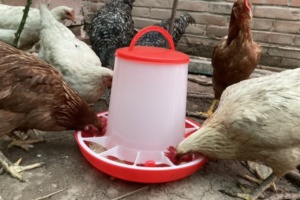
Comment choisir la meilleure mangeoire pour volailles?
A reliable feeding system is one of the foundations of efficient poultry production. Whether managing broiler chickens, laying hens, or young chicks, the choice of Mangeoire à volaille directly affects feed utilization, labor requirements, bird growth, and barn hygiene.
Many farm owners focus on feed quality and genetics but overlook the influence of feeding equipment. In daily operation, poor feeder selection can create common problems such as feed spillage, uneven access, excessive labor for refilling, and contamination from litter.
Dans notre expérience de terrain, successful poultry farms usually select feeding equipment based on several practical factors:
- Bird age and production stage
- Farm scale and house design
- Méthode d'alimentation
- Disponibilité de la main d'œuvre
- Exigences de nettoyage
- Long-term equipment durability
A commercial poultry feeding system should not only deliver feed but also support stable flock management.
This guide explains how to choose the right Mangeoire à volaille, including automatic pan feeders, plastic poultry feeders, and chick feeders, to help farm operators and distributors make better equipment decisions.
Why Poultry Feeder Selection Matters for Farm Performance
Common Feeding Challenges in Poultry Houses
During farm installation and operation, many poultry producers encounter similar feeding problems:
1. Déchets alimentaires
Feed waste increases production costs directly.
When feeders are too shallow, poorly adjusted, or unsuitable for bird size, chickens may scratch and spill feed onto the floor. In large-scale farms, even a small percentage of unnecessary feed loss can create significant annual costs.
2. Accès inégal aux aliments
Birds require sufficient feeding space to maintain uniform growth.
If some birds cannot access feed easily, weaker birds may receive less nutrition, resulting in uneven flock performance.
3. Increased Labor Requirements
Traditional manual feeding methods require frequent inspection and refilling.
For commercial farms with thousands or tens of thousands of birds, automatic feeding equipment can reduce daily labor pressure and improve feeding consistency.
4. Hygiene Management
Feed contamination is another important concern.
A good feeder design helps reduce contact between feed and litter, making cleaning easier and supporting better barn management.
Types of Poultry Feeders and Their Applications
Different poultry production systems require different feeder designs.
| Poultry Feeder Type | Suitable Birds | Main Advantages | Application typique |
| Automatic Poultry Feed Pan | Poulets de chair, commercial poultry | Approvisionnement stable en aliments, lower labor requirement | Large-scale poultry houses |
| Plastic Poultry Feeder | Calques, small farms, free-range chickens | Simple structure, easy handling | Small and medium farms |
| Turbo Grow Chick Feeder | Chicks and young birds | Easy access, reduces early feeding problems | Brooding houses |
1. Automatic Poultry Feed Pan
Best Choice for Commercial Broiler Production
For modern broiler farms, automatic feeding systems are commonly used because they provide consistent feed distribution throughout the poultry house.
An automatic poultry feed pan normally connects with:
- Feed conveying pipes
- Motors and drive systems
- Feed storage bins
- Suspension systems
Pendant l'installation de la ferme, correct feeder line positioning is essential. The feeding height should match bird growth stages to avoid unnecessary feed loss.
Avantages clés:
- Reduces manual feeding labor
- Provides more uniform feed distribution
- Supports large flock management
- Helps maintain cleaner feeding areas
Most commercial farms in regions such as Europe, l'Amérique latine, and Southeast Asia use automatic feeding systems when expanding production capacity.
2. Plastic Poultry Feeder
Practical Solution for Small and Medium Poultry Farms
Plastic poultry feeders remain popular because they are lightweight, economical, and easy to operate.
They are commonly used for:
- Backyard poultry farms
- Free-range laying hens
- Small commercial operations
A well-designed plastic feeder should have:
- Stable base structure
- Proper feeding tray depth
- Easy cleaning design
- Durable UV-resistant material
For farms with lower bird numbers, manual plastic feeders can provide a simple and cost-effective feeding solution.
3. Turbo Grow Chick Feeder
Designed for Early Chick Development
The first weeks after hatching are critical for poultry growth.
Young chicks need easy access to feed because their body size and feeding ability are still developing.
Turbo Grow Chick Feeders are designed with:
- Lower feeding height
- Accès facile aux flux
- Reduced feed scattering
- Suitable capacity for chick groups
During brooding stage management, proper feeder placement helps chicks find feed quickly and supports more uniform early growth.
How to Select the Right Poultry Feeder for Your Farm
1. Consider Bird Type and Growth Stage
The feeding behavior of chicks, poulets de chair, and layers is different.
Avant de sélectionner l'équipement, considérer:
- Chick age
- Body size
- Fréquence d'alimentation
- Production purpose
A feeder suitable for broilers may not be ideal for young chicks or laying hens.
2. Match the Feeder With Farm Capacity
Farm size determines the appropriate feeding method.
Petites fermes:
Recommended:
- Plastic poultry feeders
- Manual feeding solutions
Avantages:
- Lower investment
- Simple operation
- Remplacement facile
Commercial Farms:
Recommended:
- Automatic feed pan systems
- Integrated feeding lines
Avantages:
- Higher efficiency
- Lower labor requirement
- Better feed management
3. Évaluer la qualité des matériaux
Poultry houses are humid environments with frequent cleaning requirements.
Good feeder materials should provide:
- Résistance à la corrosion
- Impact resistance
- Nettoyage facile
- Longue durée de vie
Plastic components should maintain strength under temperature changes, while metal components should resist corrosion.
4. Consider Maintenance Requirements
A feeder system should be easy to inspect and maintain.
Farm managers should check:
- Feed flow adjustment
- Damaged components
- Accumulation d'aliments
- Cleaning condition
In commercial operations, simple maintenance procedures help prevent unexpected downtime.
Exemples d'applications agricoles
Exemple 1: Large Broiler Farm
A broiler farm with several poultry houses requires stable feeding performance.
A typical solution includes:
- Automatic poultry feed pans
- Feed delivery system
- Adjustable suspension system
This configuration helps reduce manual feeding work and provides consistent feed availability.
Exemple 2: Free-Range Layer Farm
A free-range egg farm may require flexible feeding equipment.
Plastic poultry feeders are often suitable because workers can easily move, faire le ménage, and refill them according to flock requirements.
Exemple 3: Chick Brooding House
Young chick facilities require special attention to feeder accessibility.
Turbo Grow Chick Feeders help chicks reach feed easily during early growth stages and support better feeding management.
Practical Recommendations Before Purchasing
Before selecting a Mangeoire à volaille, farm owners and distributors should evaluate:
Farm Information
- Number of birds
- House dimensions
- Bird category
- Méthode d'alimentation
Equipment Requirements
- Capacity per feeder
- Méthode d'installation
- Disponibilité des pièces de rechange
- Cleaning process
Long-Term Considerations
The cheapest feeder is not always the most economical choice.
Commercial farms should consider:
- Feed loss reduction
- Labor savings
- Maintenance cost
- Equipment lifespan
A properly selected feeding system can improve daily operation efficiency over many production cycles.
StoutAgri Poultry Feeding Solutions
StoutAgri provides practical poultry feeding equipment solutions for modern poultry farms and global distributors.
Notre gamme de produits comprend:
- Automatic Poultry Feed Pan systems
- Plastic poultry feeders
- Turbo Grow Chick Feeders
- Related poultry equipment components
Based on farm conditions, production scale, and customer requirements, our engineering team helps partners select suitable feeding solutions.
During international projects, we focus on practical details including:
- Product suitability
- Packaging and transportation
- Exigences d'installation
- Long-term operation needs
Pour les distributeurs et les entrepreneurs agricoles, reliable equipment selection is an important part of successful poultry projects.
Ask For Support
Planning a poultry project or upgrading your existing feeding system?
Contact the StoutAgri engineering team to discuss your farm requirements and receive a suitable equipment recommendation.
- Request a farm layout consultation
- Request a quotation
- Discuss your poultry equipment project