
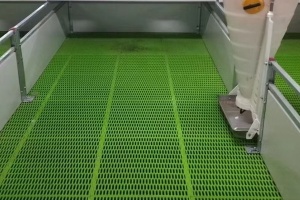
Kunststoff-Lattenboden im Vergleich zu Betonlatten: Beste Option für Schweinefarmen
Plastic slat flooring vs concrete slats is a key decision when designing a pig housing system. Both options support waste management and animal comfort, yet they perform very differently. For most modern farms, plastic slat flooring is the better choice, especially for piglets and growing pigs, due to improved hygiene, Komfort, and easier maintenance.
Quick Comparison
| Merkmal | Plastic Slat Flooring | Concrete Slats |
| Hygiene | Hoch | Medium |
| Komfort | Hoch | Niedrig |
| Haltbarkeit | Medium | Hoch |
| Wartung | Einfach | Moderate |
| Initial Cost | Higher | Untere |
| Long-Term Cost | Untere | Higher |
Why Flooring Matters
Flooring affects animal health, growth rate, und landwirtschaftliche Effizienz. Poor flooring leads to injuries, infections, and cleaning issues. In contrast, a well-designed system improves manure handling and keeps pigs in a dry environment.
Key Differences Explained
1. Hygiene and Waste Management
Plastic panels allow waste to pass through quickly. This keeps the surface clean and reduces ammonia buildup. Cleaner conditions lead to fewer diseases. Many farms report up to 25% improvement in hygiene conditions after switching.
Concrete surfaces also support waste drainage, but they tend to retain moisture. Over time, this creates a less sanitary environment.
2. Animal Comfort
Comfort directly impacts growth. Plastic materials feel warmer and softer underfoot. This is critical for piglets, which are sensitive to cold and hard surfaces. Better comfort leads to higher survival rates and improved weight gain.
Concrete, auf der anderen Seite, feels cold and hard. It increases the risk of leg injuries, especially in younger pigs.
3. Durability and Strength
Concrete slats offer strong load-bearing capacity. They suit heavy pigs and long-term use. Jedoch, cracks can develop over time, especially in high-moisture environments.
Plastic flooring resists corrosion and does not crack easily. While it may not match concrete in raw strength, it performs well in most farming conditions.
4. Maintenance and Cleaning
Plastic surfaces are easier to clean. Smooth edges prevent waste buildup. This reduces labor time.
Concrete requires more effort. Rough surfaces trap dirt and bacteria. Cleaning takes longer and increases labor costs.
Which Option Fits Your Farm?
Small Farms
Small farms often choose concrete due to lower upfront cost. Jedoch, maintenance and hygiene issues increase over time. If long-term efficiency matters, plastic becomes a smarter investment.
Large Farms
Large-scale operations need consistency and efficiency. Plastic systems reduce cleaning time and improve overall hygiene. This makes them the preferred choice for commercial farms.
Piglets vs Adult Pigs
Piglets require warmth and comfort. Plastic flooring clearly performs better in this stage. It reduces stress and supports early growth.
Adult pigs can adapt to both options. Jedoch, many farms use a combination system—plastic for young pigs and concrete for heavier animals.
Performance Impact
Better flooring improves daily operations. Farms using plastic systems often see:
- Reduced injury rates
- Cleaner housing conditions
- Lower labor requirements
- Improved growth performance
These benefits translate into higher profitability over time.
Clear Recommendation
For most pig farms, plastic slat flooring is the better option. It offers superior hygiene, better comfort, and lower maintenance effort. While concrete still works for heavy-duty use, it does not match the overall efficiency of modern plastic systems.
Take the Next Step
Choosing the right flooring system is a long-term decision. The right setup improves animal welfare and farm performance.
👉 Wenden Sie sich an Stoutagri to find the best flooring solution for your farm layout.
👉 Request a quote today and upgrade your pig housing system with reliable materials.