
 English
 العربية
 中文(简体)
 Français
 Deutsch
 Italiano
 Polski
 Português
 Русский
 Español
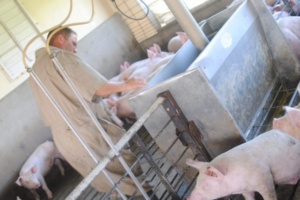
Best Pig Feeding System for Large-Scale Pig Farms: A Practical Guide
Feed represents one of the largest operating costs in commercial pig production. Therefore, choosing the right feeding system directly affects feed conversion, labor efficiency, animal growth, and overall farm profitability.
Many farm owners focus primarily on genetics and nutrition programs. However, the feeding equipment itself often determines whether those investments achieve their full potential.
The Best Pig Feeding System depends on herd size, barn layout, labor availability, and management objectives. In our field experience, farms that match feeding equipment to production requirements generally achieve better feeding consistency and lower operating costs.
This article examines the most common feeding systems used in modern pig farms and provides practical recommendations for selecting the right solution.
Problem Analysis
As pig farms continue to increase in scale, feeding management becomes more challenging.
Common problems include:
- Feed wastage caused by poor feeder adjustment
- Uneven feed access among pigs
- High labor requirements
- Feed segregation during distribution
- Equipment corrosion in humid environments
- Difficult cleaning procedures
Most commercial farms aim to achieve three primary goals:
- Minimize feed waste
- Maximize growth performance
- Reduce labor input
However, many traditional feeding systems struggle to balance all three objectives.
For example, overcrowded feeders may increase competition among pigs. Meanwhile, poorly designed feed delivery systems can create inconsistent feed distribution throughout the barn.
As a result, selecting the proper feeding system becomes a critical engineering decision rather than simply an equipment purchase.
Technical Explanation
Wet/Dry Feeding Systems
Wet/dry feeders combine feed and water access within a single feeding station.
Pigs can mix feed and water during consumption, which often improves feed intake and reduces dust generation.
Advantages include:
- Reduced feed wastage
- Improved feed palatability
- Better feed conversion performance
- Lower water spillage compared with separate systems
- Suitable for grow-finish production
During farm installation projects, wet/dry feeders are frequently selected for finishing barns where maximizing growth efficiency is a priority.
Double-Sided Stainless Steel Feeders
Double-sided feeders allow pigs to access feed from both sides of the feeder.
This design increases feeding space without significantly increasing floor space requirements.
Benefits include:
- Higher pig capacity per feeder
- Improved pen space utilization
- Reduced competition during feeding
- Strong structural durability
- Easy cleaning and maintenance
304 stainless steel construction also provides excellent corrosion resistance in humid livestock environments.
Chain Feeding Systems
Chain feeding systems transport feed automatically through a closed circuit network.
Large farms often use these systems to distribute feed across multiple buildings.
Advantages include:
- Automated feed delivery
- Consistent feed distribution
- Reduced labor requirements
- Suitable for large production complexes
- Centralized feed management
Commercial farms in North America and Europe usually combine chain feeding systems with centralized feed storage facilities to improve operational efficiency.
Comparing Common Pig Feeding Systems
| System Type | Farm Size | Labor Requirement | Feed Efficiency | Initial Investment |
|---|---|---|---|---|
| Traditional Feed Trough | Small | High | Moderate | Low |
| Wet/Dry Feeder | Medium-Large | Low | High | Moderate |
| Double-Sided Feeder | Medium-Large | Low | High | Moderate |
| Chain Feeding System | Large | Very Low | High | High |
In practice, no single system suits every farm.
Instead, the best solution depends on herd size, production goals, and available infrastructure.
Farm Application Examples
Grow-Finish Farms
Wet/dry feeders are commonly installed in grow-finish facilities because they support efficient feed utilization and easy daily management.
High-Density Finishing Barns
Double-sided feeders work well where floor space is limited. They provide additional feeding access without increasing pen size.
Integrated Production Complexes
Chain feeding systems are often selected for farms with multiple barns and centralized feed storage.
In our field experience, these systems significantly reduce manual feed handling requirements.
Practical Recommendations
When evaluating the Best Pig Feeding System, consider the following factors:
Herd Size
- Under 500 pigs: Wet/dry feeders may be sufficient.
- 500–3,000 pigs: Combination feeding solutions often work best.
- Above 3,000 pigs: Automated feed delivery systems should be evaluated.
Labor Availability
Labor shortages continue to affect livestock operations worldwide.
Therefore, farms with limited staffing often benefit from automated feeding technologies.
Building Layout
Existing barn design influences feeder placement and feed distribution methods.
A feeding system should complement the building rather than force major structural modifications.
Long-Term Maintenance
Equipment durability directly affects lifetime operating costs.
304 stainless steel components generally provide longer service life and lower maintenance requirements.
StoutAgri Related Solution
StoutAgri supplies feeding solutions for commercial pig farms worldwide.
Our product range includes:
- Double-sided stainless steel pig feeders
- Wet/dry pig feeders
- Chain feeding systems
- Feed storage and delivery components
Maintenance Checklist
Routine inspection helps maintain feeding performance and equipment lifespan.
Recommended practices include:
- Check feeder adjustment settings weekly.
- Remove feed buildup from corners and troughs.
- Inspect moving components for wear.
- Verify chain tension in automated systems.
- Clean feeding equipment between production cycles.
- Monitor feed flow consistency.
Meanwhile, regular maintenance reduces downtime and helps maintain stable feeding conditions.
Conclusion
Selecting the Best Pig Feeding System requires more than comparing equipment prices.
The right solution should match herd size, labor availability, facility design, and long-term production goals.
Wet/dry feeders offer strong feed efficiency for grow-finish operations. Double-sided stainless steel feeders improve feeding access and space utilization. Chain feeding systems support automated feed distribution in large-scale facilities.
By evaluating these factors carefully, farms can improve operational efficiency while controlling feed-related costs.
Contact StoutAgri
Planning a new pig farm or upgrading an existing feeding system?
Contact the StoutAgri engineering team for:
- Farm layout consultation
- Feeding system recommendations
- Equipment selection support
- Distributor and OEM cooperation opportunities
- Project quotations
We are happy to discuss your project requirements and recommend practical feeding solutions for your operation.