
 English
 العربية
 中文(简体)
 Français
 Deutsch
 Italiano
 Polski
 Português
 Русский
 Español
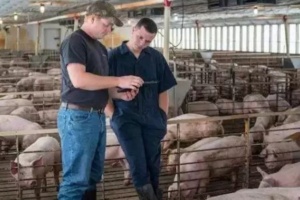
Why Pig Farm Equipment Selection Requires More Than a Product List
Equipment Selection for a new or expanding pig farm often starts with a simple question: Which products do we need?
In practice, this is not enough.
A modern pig farm operates as a connected system. Feed storage affects feeding capacity. Water supply affects drinker performance. Pen design influences animal flow and cleaning. Flooring affects manure handling. Ventilation interacts with stocking density, building design, and local climate.
When these decisions are made separately, problems often appear after installation.
In our field experience, many equipment problems are not caused by defective products. They result from an incomplete Pig Farm Equipment Selection process. A feeder may be suitable for one production stage but installed in the wrong pen layout. A nipple drinker may have the correct connection size but operate under unsuitable water pressure. A ventilation system may have sufficient fan capacity on paper but fail to provide balanced airflow inside the barn.
The goal is therefore not simply to buy more equipment or choose the lowest-priced option. The goal is to select equipment that works together under real farm conditions.
This guide reviews common mistakes and explains how commercial farms and equipment buyers can make more practical purchasing decisions.
The Cost of Selecting Equipment in Isolation
Pig farms are usually divided into functional systems:
- Feed storage and feed delivery
- Pig feeding
- Drinking water supply
- Pig pens and animal movement
- Flooring and manure management
- Ventilation and climate control
- Heating for specific production stages
Each system has its own equipment, but they also affect one another.
For example, increasing the number of pigs in a pen may require more than additional feeders. It can also change water demand, ventilation requirements, manure load, available floor space, and cleaning frequency.
Most commercial farms understand this once the farm is operating. The problem is that many purchasing decisions happen before the complete operational picture is reviewed.
A lower initial equipment cost can become less attractive if the farm later needs to modify water lines, add feeding capacity, replace undersized equipment, or change the pen layout.
A Better Question Before Purchasing
Instead of asking:
Which pig equipment is the cheapest?
Commercial buyers should ask:
Will this equipment work with the production stage, barn layout, utility capacity, climate, and management method of this farm?
That shift in thinking is the foundation of better Pig Farm Equipment Selection.
Mistake 1: Choosing Equipment Before Defining the Farm Production System
The first major mistake is starting with individual products rather than the production plan.
A farrow-to-finish farm has different requirements from a nursery or finishing farm. Equipment for sows, piglets, growers, and finishing pigs should not be selected using the same assumptions.
Before preparing an equipment list, the farm should define:
- Production stages
- Number of pigs in each stage
- Expected stocking density
- Batch or continuous production system
- Pen dimensions
- Feeding method
- Water supply conditions
- Manure management method
- Local temperature and humidity
During farm installation, we often find that early planning focused on the total number of animals while paying insufficient attention to how many animals would occupy each production area at the same time.
This can lead to undersized feeders, insufficient drinker points, or an incorrect distribution of equipment between rooms.
Practical Recommendation
Prepare an equipment schedule by production area, not only by total farm capacity.
For example:
| Production Area | Main Equipment Considerations |
| Farrowing | Sow feeding, piglet access, drinking, localized heating |
| Nursery | Piglet feeders, drinkers, flooring, temperature control |
| Growing | Feeding capacity, drinker flow, ventilation |
| Finishing | High-capacity feeding, water supply, manure management |
| Service Areas | Feed storage, feed delivery, maintenance access |
This approach makes equipment quantities and specifications easier to verify before purchasing.
Mistake 2: Selecting Feeders Based Only on Capacity or Price
A feeder is not simply a container for feed.
The right Pig Feeder must match pig size, feed type, feeding behavior, group size, and the farm’s management system.
A common mistake is selecting a feeder based only on how many kilograms of feed it can hold. Storage capacity does not automatically determine feeding efficiency.
Commercial farms should also consider:
- Number of pigs served by each feeder
- Feeding space and access
- Dry or wet/dry feeding requirements
- Feed adjustment mechanism
- Feed flow consistency
- Cleaning access
- Material durability
- Installation position
For example, a wet/dry feeder may suit farms that want pigs to access feed and water at the same feeding point. However, the complete drinking and water supply arrangement still needs to support that design.
Similarly, double-sided feeders can improve equipment utilization in some pen layouts, but only when the building layout allows pigs to access both sides properly.
Farm Impact
Incorrect feeder selection can contribute to:
- Uneven feed access
- Excess feed on the floor
- Higher cleaning requirements
- More frequent manual adjustment
- Difficulty matching equipment to pig growth stages
The best choice depends on the operating system rather than a single product feature.
Mistake 3: Ignoring Water Pressure and Flow During Drinker Selection
Pig drinkers are frequently selected according to thread size or material while water system conditions receive less attention.
This creates problems after installation.
A Pig Nipple Drinker needs appropriate pressure and flow for the animals using it. If the pressure is too low, pigs may not receive sufficient water. If pressure is too high, water waste can increase and the surrounding pen may become wetter.
The drinker also needs to match:
- Pig age and size
- Installation height
- Installation angle
- Water pressure
- Pipe design
- Water quality
- Required flow rate
In our field experience, water system problems often appear when drinkers are purchased separately from the overall drinking line design.
A properly planned Pig Drinking System should include suitable control and pressure management equipment rather than relying on individual drinkers to solve every water-related problem.
Practical Recommendation
Before confirming drinkers, check:
- Available water pressure at the barn
- Pressure variation across the drinking line
- Pipe size and line length
- Number of drinkers per line
- Expected pig size
- Water quality and filtration requirements
Testing the water system during commissioning is also important. Installation alone does not confirm that every drinking point performs consistently.
Mistake 4: Treating Flooring as a Separate Construction Item
Flooring decisions affect more than pig comfort.
Plastic Pig Slats and their support structure influence manure passage, cleaning work, load distribution, and long-term maintenance.
One common mistake is purchasing slats without fully reviewing the support system.
During farm installation, the following details should be checked:
- Slat dimensions and span
- Support beam spacing
- Load requirements
- Secure panel seating
- Alignment between sections
- Access for cleaning and replacement
- Compatibility with the manure pit or drainage design
A flooring panel may perform well under one support arrangement and poorly under another.
For this reason, Fiberglass Slat Support Beams and flooring panels should be considered as one structural system.
Commercial farms in humid regions or areas with frequent washing often place additional emphasis on corrosion resistance and cleaning. However, the final selection still depends on structural requirements and the intended production stage.
Practical Recommendation
Ask suppliers for installation guidance based on the actual pen layout rather than ordering flooring only by square meter quantity.
Mistake 5: Underestimating Ventilation Requirements
Ventilation is sometimes treated as an optional upgrade rather than a core production system.
This can become a serious operational problem in high-density pig housing.
Fan selection should consider more than barn size. Airflow requirements are influenced by:
- Number and weight of pigs
- Local climate
- Building dimensions
- Insulation
- Air inlet design
- Seasonal operating conditions
- Desired air movement pattern
Installing several exhaust fans does not automatically create good ventilation.
The direction and distribution of incoming air are equally important. Poor air distribution can leave some areas with stagnant air while other sections experience excessive drafts.
Most commercial farms benefit from reviewing the complete Ventilation System, including fans, air inlets, controls, and operating strategy.
In hot climates, Cooling Pads may also form part of the climate control strategy. In colder environments or young pig areas, localized heating equipment can be necessary.
The correct solution depends on the regional climate and the barn design.
Mistake 6: Buying the Lowest-Cost System Without Considering Maintenance
Initial purchase price is easy to compare. Maintenance requirements are less visible during procurement.
However, commercial farms operate equipment every day.
Before purchasing, buyers should consider:
- How easily can workers clean the equipment?
- Are wearing parts accessible?
- Can components be replaced without major modification?
- Are standard connections used?
- Is routine adjustment simple?
- Can spare parts be stocked locally?
A lower-cost product can become expensive if it requires frequent downtime or complicated replacement procedures.
During equipment evaluation, maintenance access should be reviewed using the actual barn environment. A product that is easy to service on a showroom floor may be more difficult to maintain once installed between pens, pipelines, or structural components.
Maintenance Should Be Part of the Selection Process
Good Pig Farm Equipment Selection considers the full operating period, not only the day of installation.
Mistake 7: Forgetting Future Expansion and System Compatibility
Some farms start with a limited capacity but plan to expand later.
If this is not considered during the first equipment purchase, expansion may require replacing systems that could otherwise have been extended.
Feed storage is a good example.
A Feed Silo or Feed Bin should match current demand, but the site layout should also consider future feed delivery equipment, access for trucks, and possible additional storage capacity.
The same principle applies to:
- Water supply pipelines
- Electrical capacity
- Feed delivery systems
- Ventilation controls
- Pen layouts
- Service corridors
The goal is not to purchase maximum capacity immediately. Instead, the farm should avoid creating physical or technical barriers that make future expansion unnecessarily expensive.
A Practical Pig Farm Equipment Selection Checklist
Before placing an order, commercial buyers should review the following questions.
Farm and Production
- What production stages will the farm operate?
- How many pigs will occupy each area?
- What is the expected maximum stocking level?
- What management system will workers use?
Equipment Compatibility
- Does the feeder match the pig size and feeding method?
- Does the drinking system match available pressure and flow?
- Does flooring match its support structure?
- Does the ventilation system match the building and climate?
Installation
- Are equipment locations shown on the farm layout?
- Are support structures and connections confirmed?
- Is maintenance access available?
- Are utility requirements sufficient?
Long-Term Operation
- Which components require routine adjustment?
- Which spare parts should be stocked?
- Can the system be expanded?
- Who will perform maintenance and inspections?
This checklist helps identify compatibility issues before equipment reaches the farm.
A More Practical Purchasing Workflow
For larger projects, we recommend the following sequence:
1. Confirm the Production Requirements
Define animal numbers, production stages, management methods, and regional conditions.
2. Review the Barn Layout
Confirm pen dimensions, service areas, feed storage locations, water lines, ventilation positions, and maintenance access.
3. Divide the Farm Into Equipment Systems
Separate feeding, drinking, flooring, pen equipment, and climate control, while checking how they interact.
4. Select Products for Each Application
Choose the equipment according to the actual production stage and operating conditions.
5. Check Installation Interfaces
Review dimensions, connections, support structures, electrical requirements, and utility capacity.
6. Review Maintenance and Spare Parts
Identify components that require regular inspection or replacement before the farm begins operation.
This process may take more time before purchasing, but it can reduce avoidable modifications during installation.
How StoutAgri Supports Pig Farm Equipment Projects
StoutAgri supplies a range of equipment for modern pig housing projects, including feeding systems, drinking systems, pig feeders, drinkers, pig nipple drinkers, plastic pig slats, support beams, ventilation equipment, cooling pads, and heating products.
Our approach is to help buyers review how these products fit into the wider farm system.
For example, a project discussion may begin with a feeder or drinking system inquiry but later include questions about pen layout, water supply, flooring support, or climate control. Reviewing these connections early can help buyers identify installation issues before equipment procurement is finalized.
For distributors, this system-based approach can also make product selection easier when serving different farm types and production stages.
The objective is practical compatibility between equipment, installation conditions, and daily farm operation.
Final Thoughts: Avoiding Problems Before Equipment Arrives
The biggest mistake in pig farm equipment procurement is assuming that every product can be selected independently.
Modern pig farms depend on connected systems.
Feeders need to match pig groups and pen layouts. Drinkers need to work with the available water system. Flooring needs suitable structural support. Ventilation needs to match both animal numbers and building design.
In our field experience, the most successful projects usually spend more time reviewing these relationships before placing the order.
That does not necessarily mean buying the most expensive equipment. It means making decisions based on the actual operating requirements of the farm.
A structured Pig Farm Equipment Selection process can help reduce installation changes, simplify maintenance, improve daily workflow, and create a stronger foundation for future expansion.
Discuss Your Pig Farm Equipment Project With StoutAgri
If you are planning a new pig farm, upgrading an existing facility, or sourcing equipment for a distribution project, the StoutAgri engineering team can help review your equipment requirements.
You can request a farm layout consultation, discuss your project requirements, or request a quotation based on your planned production system and equipment needs.
Contact StoutAgri to discuss your pig farm equipment project and build a more practical equipment selection plan.