
 English
 العربية
 中文(简体)
 Français
 Deutsch
 Italiano
 Polski
 Português
 Русский
 Español
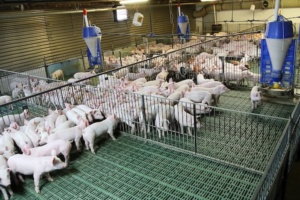
Why Pig Slat Flooring Matters in Modern Pig Barns
Flooring is one of the decisions that is easiest to underestimate during pig barn design. Feeders, drinkers, ventilation, and climate control often receive more attention, but the floor affects almost every daily activity inside the pen.
A well-designed Pig Slat Flooring system needs to support pigs, allow manure and urine to pass into the slurry system, withstand cleaning and loading, and remain safe throughout its service life.
In our field experience, flooring problems rarely stay isolated. A damaged slat can affect pig movement and hygiene. Poorly supported sections can create uneven surfaces. Incorrect drainage can increase manure accumulation and cleaning requirements.
Modern pig housing therefore treats flooring as part of the complete barn system rather than as a separate construction item. The floor must work together with pen partitions, feeding equipment, drinking points, manure storage, ventilation, and cleaning procedures.
AHDB also notes that building design, flooring, environmental conditions, and associated equipment all influence pig housing performance.
What Does Pig Slat Flooring Do?
A slatted floor uses solid structural sections separated by openings. Pigs stand and rest on the solid surface while manure and urine can pass through the openings into an area below or into a manure channel.
This creates three important operating functions:
- Waste separation: manure and urine move away from the main animal area.
- Hygiene management: less waste remains directly on the pen floor.
- Labor efficiency: the farm can reduce some manual manure removal and cleaning work.
Fully or partially slatted systems are common in commercial pig housing because the floor integrates directly with the manure-management system. AHDB describes slatted floors as a common option in pig buildings and highlights the relationship between flooring choice and building design.
However, a slatted floor does not automatically solve hygiene problems. Water leaks, excessive stocking density, poor ventilation, incorrect drainage, or inadequate manure storage can still create wet and dirty pens.
The floor should therefore be designed as one part of the complete environmental system.
Main Types of Pig Slat Flooring
The most suitable flooring depends on pig category, barn design, cleaning method, structural requirements, and local regulations.
1. Concrete Pig Slats
Concrete remains widely used in commercial pig buildings because of its structural strength and durability.
Typical advantages include:
- High load-bearing capacity
- Long service life when correctly manufactured and installed
- Compatibility with large commercial barns
- Good resistance to routine washing
- Suitable integration with manure pits
The surface finish matters. Pig housing guidance emphasizes that floors should be smooth but not slippery, should not injure pigs, and should suit the animals housed on them.
2. Plastic Pig Slats
Plastic slats can provide a lighter flooring solution, particularly in applications where corrosion resistance, hygiene, and ease of handling matter.
Compared with heavy concrete components, plastic sections can be easier to move during installation or replacement.
They are particularly useful when the project requires modular flooring or when the farm wants to simplify maintenance and replacement procedures.
3. Partial Slatted Flooring
Partial slatted systems combine a solid area with a slatted manure area.
This design can separate resting and dunging zones more clearly when the pen layout and environmental conditions support that behavior.
The correct proportion depends on the pig category, housing system, feeding arrangement, welfare requirements, and applicable local regulations. For example, current Teagasc guidance for certain pig housing situations demonstrates that solid-floor requirements can vary according to the housing and feeding arrangement.
| Flooring Type | Main Strength | Typical Consideration |
| Concrete slats | Structural strength and durability | Heavy components and careful installation |
| Plastic slats | Lightweight and corrosion-resistant | Must match load and application requirements |
| Partial slats | Combines solid and slatted areas | Requires careful pen layout |
| Full slats | Efficient manure passage | Flooring comfort and animal safety require attention |
How to Select the Right Flooring for Your Farm
Start With the Pig Category
Do not select flooring only by price.
A floor designed for piglets may not be appropriate for heavy finishing pigs or breeding sows.
Consider:
- Pig weight and growth stage
- Pen type
- Stocking density
- Feeding arrangement
- Drinking system
- Cleaning method
- Expected manure volume
The floor must provide adequate structural performance for the maximum expected load, not simply the average animal weight.
Match the Floor to the Manure System
During farm installation, one common mistake is to select the floor first and design the manure system afterward.
The correct sequence is usually the opposite.
First consider:
- Number and weight of pigs
- Pen dimensions
- Manure production
- Pit or channel configuration
- Slat layout
- Cleaning and maintenance access
A slatted barn should have adequate manure storage capacity and should avoid unnecessary water entering the slurry system. Teagasc specifically recommends avoiding additional water entering slurry tanks and maintaining appropriate storage capacity.
Installation: Where Many Flooring Problems Begin
Even good-quality slats can perform poorly when installation is inaccurate.
Check the Supporting Structure
Before placing the slats, verify:
- Support beam position
- Beam level
- Bearing surfaces
- Overall span
- Slat alignment
- Gaps between components
- Load distribution
For modular systems, every section should sit firmly on its designed support points.
An uneven support structure can create localized stress. Over time, that may result in movement, cracking, or premature component damage.
Keep the Surface Consistent
A finished floor should provide a continuous and predictable walking surface.
During installation, inspect for:
- Raised edges
- Broken corners
- Excessive gaps
- Uneven joints
- Damaged surfaces
- Sharp projections
These details become particularly important in high-traffic areas around feeders and drinkers.
Coordinate Flooring With Other Equipment
The flooring layout should also consider the position of:
- Pig feeders
- Pig nipple drinkers
- Water bowls
- Pen partitions
- Cleaning equipment
- Manure channels
For example, leaking drinkers can create wet areas around the floor. A good flooring system cannot compensate for poor water-system installation.
Farm Application: Different Areas Need Different Priorities
Weaner and Nursery Pens
Young pigs have different physical requirements from finishing pigs. Flooring should provide appropriate support while maintaining a clean and dry environment.
The transition between solid and slatted areas also deserves attention because young animals can be more sensitive to uneven surfaces.
Grower and Finisher Pens
For heavier pigs, structural loading becomes a major consideration.
Commercial farms should evaluate:
- Maximum pig weight
- Slat dimensions
- Support spacing
- Floor loading
- Cleaning frequency
- Expected service life
A small difference in component strength can become important when thousands of pigs use the flooring continuously.
Sow Housing
Sow housing requires particular attention to comfort, movement, hoof condition, and welfare.
Floor selection should therefore consider more than manure removal. Research and industry guidance have highlighted relationships between housing design, flooring, animal movement, and welfare.
For breeding areas, the flooring decision should be integrated with the complete housing and management system.
How Flooring Connects With the Rest of the Barn
A modern pig barn should not treat flooring as an independent product.
Flooring + Feeding
Feeding areas often receive heavy traffic. The floor around feeders needs to withstand repeated movement and cleaning.
Flooring + Drinking
Water leakage can quickly change a clean slatted area into a wet zone.
A properly installed Pig Drinking System should therefore be evaluated together with the flooring layout.
Flooring + Ventilation
Floor temperature, air movement, manure exposure, and moisture all influence the barn environment. AHDB notes that flooring forms part of the physical environment that affects pigs’ temperature requirements.
Flooring + Manure Management
The slat opening, support structure, pit design, and manure storage capacity must work together.
This is why a flooring quotation should never be evaluated only on the price per square meter.
Practical Buyer Checklist
Before purchasing Pig Slat Flooring, commercial buyers should confirm:
- Intended pig category and maximum weight
- Required floor area
- Full or partial slatted design
- Slat material
- Load-bearing requirements
- Support beam arrangement
- Slat dimensions
- Opening and solid-surface dimensions
- Pen layout
- Manure pit configuration
- Cleaning method
- Local welfare requirements
- Replacement and maintenance access
For international projects, buyers should also confirm applicable local construction, animal welfare, and environmental requirements before finalizing the design.
StoutAgri Flooring Solution for Commercial Pig Farms
StoutAgri supplies Plastic Pig Slats and Fiberglass Slat Support Beams as part of its pig equipment range.
For a complete project, flooring can be considered together with:
- Pig Feeding System
- Pig Feeders
- Pig Drinking System
- Pig Nipple Drinkers
- PVC Panel for Pig Pens
- Fiberglass Slat Support Beams
This system-based approach helps buyers evaluate flooring according to the actual barn layout rather than purchasing individual components in isolation.
For distributors, this also makes it easier to develop equipment packages for different pig production systems and project sizes.
Discuss Your Pig Farm Flooring Project
Planning a new pig barn or replacing an existing flooring system?
Contact the StoutAgri team to discuss your farm layout, pig category, flooring requirements, and related equipment. You can also request a quotation based on your project specifications.