
 English
 العربية
 中文(简体)
 Français
 Deutsch
 Italiano
 Polski
 Português
 Русский
 Español
Choosing a Poultry Drinking System Starts With the Farm
Two common options are Poultry Bell Drinkers and poultry nipple drinkers. Both can provide reliable drinking water when correctly selected and installed, but they operate quite differently.
Bell drinkers provide an open drinking area where birds drink from a water-filled trough or bell-shaped pan. Nipple systems deliver water through valves that birds activate with their beaks.
Neither system is automatically better for every poultry farm.
In our field experience, the better choice depends on the bird type, housing design, flock size, labor availability, water management practices, and the level of automation required.
For a small or medium poultry operation, a simple bell drinker system may be practical. A large commercial broiler or layer house may benefit more from a properly designed nipple drinking line.
How Poultry Bell Drinkers Work
A Poultry Bell Drinker normally connects to a water supply line and maintains water in a shallow drinking area beneath the bell.
As birds consume water, the water level falls and the system replenishes the supply.
The design is straightforward, which makes installation and daily inspection relatively easy.
Main advantages
Easy access for birds
Birds can see the water surface and drink naturally from the open area.
Simple operation
Farm workers can quickly check whether water is available and identify obvious problems.
Suitable for different farm scales
Bell drinkers can work well in smaller poultry houses, floor-reared systems, and some free-range or semi-intensive operations.
Relatively simple maintenance
The components are generally easy to understand and replace.
Limitations to consider
The main issue is that the drinking water remains exposed to the barn environment.
Feed particles, litter, dust, feathers, and manure can enter the drinking area. This means the drinkers require regular cleaning.
Water spillage can also increase litter moisture around the drinker. If drinker height, water level, or installation position is incorrect, the problem can become more noticeable.
For farms with limited labor, frequent cleaning can become a significant operating consideration.
How Poultry Nipple Drinkers Work
A poultry nipple drinking system uses small valves installed along a drinking line. Birds touch or press the nipple with their beaks to release water.
The system normally includes a water supply line, pressure regulation, drinking nipples, suspension or support components, and related fittings.
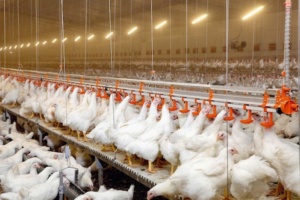
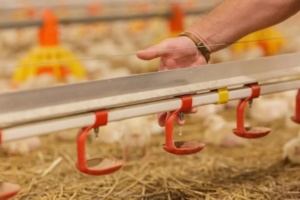
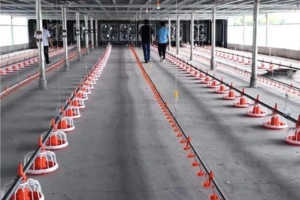
Why commercial farms often use nipple systems
Less exposed water
The water remains inside the supply line until the bird activates the nipple.
Cleaner drinking points
Because there is no open water pan, the system can reduce contamination from litter, feed, and feathers.
Reduced water spillage when correctly adjusted
Correct pressure, nipple condition, and line height help control unnecessary water release.
Suitable for automated houses
Nipple lines integrate naturally with modern poultry house water distribution systems.
However, nipple systems require more attention to installation and adjustment.
Water pressure must suit the equipment and birds. Drinking lines need correct height and leveling. Workers also need to check individual nipples for leakage or blockage.
Poultry Bell Drinkers vs Nipple Drinkers: Practical Comparison
| Factor | Poultry Bell Drinkers | Poultry Nipple Drinkers |
| Water access | Open drinking area | Bird activates nipple |
| Initial system complexity | Lower | Higher |
| Cleaning requirement | Higher | Generally lower |
| Exposure to litter | Higher | Lower |
| Water spillage risk | Can be higher | Can be controlled with correct adjustment |
| Installation | Relatively simple | Requires careful line installation |
| Pressure management | Less demanding | Important |
| Height adjustment | Important | Very important |
| Large automated houses | Less common | Common |
| Daily inspection | Easy visual inspection | Requires checking lines and nipples |
| Suitability | Smaller and floor systems | Modern commercial systems |
The table should not be interpreted as a universal ranking. Farm management practices can change the result considerably.
Which System Works Better for Different Poultry Farms?
Broiler houses
Modern broiler houses often favor nipple drinking systems because the lines can cover long house sections and integrate with automated management.
The system also keeps the water supply relatively protected from litter and feed.
During farm installation, line height should match bird growth. Some systems allow the drinking line to be adjusted as the flock develops.
Layer and breeder operations
The choice depends strongly on the housing system.
Caged, floor-raised, aviary, and free-range layers may have different requirements. Drinking equipment should therefore be selected together with the housing and feeding arrangement.
Small and medium poultry farms
Poultry Bell Drinkers can remain a practical choice where the farm values simple operation and easy visual inspection.
For farms with readily available labor, regular cleaning may be manageable.
Chick rearing
Young birds need easy access to water. Drinkers should match bird size and be positioned so chicks can find and use them without difficulty.
For some systems, farmers may use dedicated chick drinking equipment during the early stage before moving birds onto the main drinking system.
Installation Details That Should Not Be Overlooked
The equipment itself is only one part of the drinking system.
For bell drinkers
Check:
- Drinker height
- Water level
- Distance between drinking points
- Stability of the drinker
- Drainage around the drinking area
- Ease of cleaning
The floor around the drinker should remain as dry as practical.
For nipple drinking systems
Pay particular attention to:
- Water pressure
- Drinking line height
- Line leveling
- Nipple spacing
- End-of-line flushing
- Leakage inspection
- Pressure regulator selection
A drinking nipple that works correctly at one pressure may not perform the same way under another operating condition.
This is why pressure regulation and line adjustment should be considered during system design rather than treated as installation details afterward.
Hygiene and Labor: The Practical Difference
The biggest operational difference between the two systems is often not the drinker itself. It is the amount of work required to maintain the drinking environment.
With open bell drinkers, workers need to monitor water cleanliness and remove contamination regularly.
With nipple systems, the open water surface disappears, but maintenance does not disappear. Workers still need to inspect nipples, check pressure, flush the lines, and identify leaks.
A commercial farm should therefore compare total operating requirements, not just equipment purchase price.
For example:
A cheaper drinking system may require more cleaning labor every day, while a more controlled system may require greater attention during installation and maintenance.
The right choice depends on which operating model fits the farm.
Buyer Recommendations: What Should You Choose?
Before purchasing Poultry Bell Drinkers or nipple drinkers, evaluate these questions:
- What type of poultry are you raising?
- How many birds will use the system?
- What housing system do you have?
- How much daily cleaning labor is available?
- What is the available water pressure?
- How will the system be cleaned and maintained?
- Is future automation important?
- Can replacement components be sourced easily?
For distributors, there is another consideration: market coverage.
A distributor serving small farms may need several bell drinker sizes, while a supplier focused on modern commercial poultry houses may need complete nipple drinking system components.
StoutAgri Poultry Drinking Solutions
StoutAgri supplies poultry drinking equipment for different farm applications, including Poultry Bell Drinkers and Poultry Nipple Drinkers.
For projects using nipple systems, related components such as drinking lines, pressure regulation equipment, pulleys, and hand winches can be considered as part of the overall installation.
For simpler floor-rearing applications, bell drinkers provide another practical option where easy visual access and straightforward maintenance are priorities.
Our recommendation is to select the drinking system based on the complete farm setup rather than choosing equipment only from a product specification sheet.
Discuss Your Poultry Drinking System
Planning a new poultry house or replacing an existing drinking system?
Contact the StoutAgri engineering team to discuss your farm layout, bird type, drinking method, and equipment requirements.
You can also request a quotation for Poultry Bell Drinkers, Poultry Nipple Drinkers, or related poultry drinking system components.