
 English
 العربية
 中文(简体)
 Français
 Deutsch
 Italiano
 Polski
 Português
 Русский
 Español
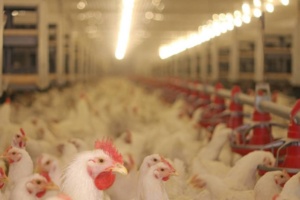
Poultry Feeding System Explained: Types, Costs, and Benefits
A reliable Poultry Feeding System is one of the most important components in modern broiler production. It directly affects feed conversion ratio (FCR), flock uniformity, and daily labor requirements.
In commercial poultry houses, feeding is not only about delivering feed. It is about ensuring consistent access, minimizing waste, and maintaining a stable growth environment.
In our field experience, farms with poor feeding design often face uneven growth and higher mortality risks, even when feed quality is stable. Therefore, feeding system selection must be considered as part of the overall barn engineering design.
Common solutions today include automatic pan feeding systems, manual winch-based feeding lines, and hybrid mechanical distribution setups.
Problem Analysis
Many poultry farms underestimate feeding system design until operational problems appear.
Typical issues include:
- Uneven feed distribution across long poultry houses
- Excess feed waste due to improper pan height adjustment
- High labor demand for manual feeding control
- Mechanical wear in humid and dusty environments
- Inconsistent bird access leading to flock variation
Most commercial farms report that feeding inefficiencies do not come from feed formulation, but from system design and maintenance gaps.
For example, in long broiler houses, feed may accumulate unevenly if line leveling is not adjusted properly. Meanwhile, overfilled pans often lead to feed spillage and hygiene issues.
Therefore, system engineering is as important as nutrition planning.
Technical Explanation
A modern Poultry Feeding System typically consists of three main components:
1. Feed Delivery Line
This includes auger tubes or chain systems that transport feed from silo to barn.
2. Feed Distribution Mechanism
Feed is evenly distributed along the house using controlled discharge points.
3. Feeding Units (Pan Feeders)
Automatic broiler pan feeders regulate feed availability at bird level.
Mechanical Support Components
StoutAgri also integrates auxiliary systems such as:
- Hand winch systems for height adjustment
- Pulley mechanisms for line leveling
- Suspension cables for stable feeder positioning
These components ensure that feeding lines remain balanced during flock growth.
Engineering Logic
- Feed level must match bird age and density
- Pan height must adjust weekly to prevent waste
- Line leveling must be maintained across full barn length
- Feed flow rate must remain stable under varying silo pressure
A stable system improves FCR and reduces feed conversion variability.
Farm Application Examples
1: Large-scale broiler farm (50,000–100,000 birds)
- Uses automatic pan feeding system
- Reduces labor by up to 40–60%
- Improves flock uniformity across long houses
2: Medium poultry operation
- Combines manual winch adjustment with mechanical feed lines
- Provides flexible feeding control during early growth stages
3: Export-oriented integrated farms
- Use centralized silo feeding systems
- Require high durability components for continuous operation cycles
Practical Recommendations
Based on engineering experience:
- Maintain consistent feeder line height across all houses
- Adjust pan height weekly according to bird weight
- Inspect auger lines every production cycle
- Avoid overfilling feed pans in early growth stages
- Ensure proper ventilation to reduce feed moisture absorption
In addition, farms in humid regions should prioritize corrosion-resistant materials to extend system lifespan.
StoutAgri Related Solution
StoutAgri provides integrated components for modern Poultry Feeding System design, including:
- Automatic broiler pan feeders for controlled feed access
- Hand winch systems for precise height adjustment
- Pulley systems for stable line balancing
These components are designed for long-term use in high-density poultry environments.
During installation projects, our engineering team often assists farms with:
- Layout optimization for feed line spacing
- Feeder density calculation per house length
- System calibration for uniform feed distribution
👉 Request a farm layout consultation from the StoutAgri engineering team for system optimization.
Maintenance Checklist
To maintain system performance:
- Clean feed lines after each production cycle
- Check auger wear every 2–3 flocks
- Inspect pan feeder movement and alignment
- Verify winch and pulley tension regularly
- Remove feed dust buildup in distribution units
Proper maintenance significantly reduces mechanical failure risk and improves flock consistency.
Conclusion
A well-designed Poultry Feeding System is not only equipment selection—it is a complete farm engineering decision.
From feed transport to final distribution, every stage influences flock performance, feed efficiency, and operational cost.
Modern poultry farms increasingly rely on automated and semi-automated systems to reduce labor pressure and improve production stability.
Contact Us
If you are planning a new poultry house or upgrading your feeding system, StoutAgri can provide technical support.
👉 Contact our engineering team for:
- Farm layout consultation
- Feeding system selection guidance
- Bulk quotation for equipment supply