
 English
 العربية
 中文(简体)
 Français
 Deutsch
 Italiano
 Polski
 Português
 Русский
 Español
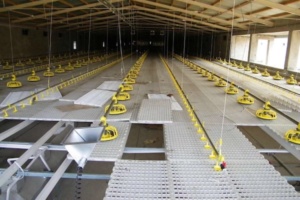
What Is Poultry Slat Flooring?
Poultry slat flooring is a raised floor system used in poultry houses to separate birds from manure, spilled water, and wet bedding. The floor consists of individual slats with openings that allow droppings and moisture to pass into a manure collection or waste-management area below.
Modern poultry slats are commonly manufactured from durable plastic materials. Compared with solid flooring, plastic slats provide a more controlled surface for poultry housing where hygiene, cleaning, and waste handling are important.
The flooring system may cover the entire house or only selected areas, such as:
- Brooding and rearing zones
- Breeding areas
- Layer-house sections
- Duck or specialty poultry housing
- Areas around feeding and drinking equipment
- Raised platforms above manure collection spaces
The correct design depends on bird type, age, stocking density, house layout, cleaning procedures, and local welfare requirements.
How Slat Flooring Works in a Commercial House
A slatted floor creates a separation between the bird area and the manure-handling space. As birds move, feed, and rest, droppings pass through the openings between the slats. This reduces direct contact between birds and accumulated waste.
A typical raised poultry flooring system includes:
- Plastic slat panels – The walking surface for the birds.
- Supporting structure – Beams, legs, or a frame that carries the floor load.
- Manure collection area – A pit, tray, belt, or other waste-management space beneath the floor.
- Access and cleaning arrangements – Openings or removable sections for inspection and maintenance.
During farm installation, the support structure must remain level and stable. Uneven panels can create pressure points, movement, or gaps that affect bird movement and worker safety.
The floor should also work together with the house’s ventilation and manure-management system. A raised floor alone does not solve every hygiene problem. Water leaks, excessive humidity, poor ventilation, and irregular manure removal can still create difficult operating conditions.
Main Advantages of Poultry Slat Flooring
1. Improved Separation from Manure
The main advantage of slatted flooring is the physical separation between birds and accumulated droppings.
When the floor openings and manure collection system work correctly, birds have less direct contact with waste. This can support a cleaner housing environment and reduce the amount of manure that remains on the walking surface.
However, the result depends on:
- Correct slat opening design
- Suitable support spacing
- Effective manure removal
- Proper ventilation
- Regular inspection of blocked areas
If manure builds up beneath the floor or sticks to the slat openings, the system will not perform as intended.
2. Better Moisture Management
Wet areas commonly develop around drinkers, particularly when water pressure, drinker height, or line adjustment is incorrect.
Poultry slats can help spilled water move away from the bird walking surface rather than allowing it to remain in bedding. This may reduce wet patches and make cleaning more manageable.
The flooring system should still be combined with:
- Correct drinker installation
- Water-pressure control
- Regular inspection for leaks
- Proper ventilation
- Timely removal of wet manure or bedding
Slats can support moisture management, but they cannot compensate for a leaking drinking line or excessive water delivery.
3. Easier Routine Cleaning
Plastic slat panels are generally easier to wash than many porous flooring materials. Their non-absorbent surface can reduce the amount of organic material retained in the floor itself.
Depending on the design, removable panels can also make it easier to access the area beneath the floor or replace damaged sections.
Cleaning procedures should consider:
- Removing manure and organic material before washing
- Using suitable cleaning equipment
- Allowing surfaces to dry properly
- Checking joints and support points
- Inspecting the floor after reinstallation
The cleaning method must match the plastic material and the manufacturer’s recommendations. Excessive impact or unsuitable chemicals may shorten the service life of the panels.
4. Durable and Corrosion-Resistant Construction
Plastic poultry slats are often selected for their resistance to moisture and corrosion. Unlike untreated metal surfaces, plastic does not rust when exposed to water and manure.
A suitable slat system should maintain its shape and load-bearing performance under normal farm conditions. Buyers should review:
- Material quality
- Panel thickness and structure
- Load capacity
- UV exposure, where relevant
- Resistance to cleaning chemicals
- Support requirements
- Temperature conditions during operation
Low-quality plastic may become brittle, deform, or crack, particularly when exposed to unsuitable conditions or excessive loading.
5. Better Floor Organization in Specialized Poultry Housing
Raised flooring can help organize poultry-house space where the farm needs a defined bird area above a manure collection zone.
It may be useful when the project requires:
- A raised platform
- A defined dry resting surface
- Separation between birds and waste
- Easier access beneath the floor
- Integration with a manure collection system
The system should be selected as part of the complete house design rather than treated as an isolated product.
Poultry Slat Flooring Compared with Solid Flooring
The choice between slatted and solid flooring depends on the production system and management objectives.
| Factor | Poultry Slat Flooring | Solid Flooring |
| Manure separation | Allows droppings to pass through openings | Manure remains on the surface or bedding |
| Moisture control | Can move waste and spilled water away from bird level | Depends heavily on bedding and cleaning |
| Cleaning | Plastic panels can be washed and inspected | Often requires removal or replacement of bedding |
| Installation | Requires proper supports and leveling | Usually simpler to install |
| Initial system design | More planning may be necessary | Often less complex |
| Maintenance | Requires inspection of panels, supports, and openings | Requires bedding and surface management |
| Best fit | Raised housing and specialized waste-management layouts | Systems using litter or solid bedding areas |
Neither system is automatically suitable for every poultry farm. Bird welfare, house climate, manure handling, labor, and local regulations should guide the decision.
Practical Uses in Poultry Farms
Broiler and Rearing Applications
In selected broiler or rearing systems, raised plastic flooring can help manage manure and moisture while providing a stable walking surface.
The floor design should match the bird’s age and body size. Young birds require safe access and a surface that does not create excessive foot pressure or trapping points.
Layer and Breeding Houses
Slatted flooring may be used in parts of layer or breeder housing where the layout requires separation from manure. The design must work with nests, feeding equipment, drinking lines, and bird movement patterns.
Special attention should be given to transitions between slatted and solid areas. Sudden height differences or unstable edges can create injury risks.
Duck and Specialty Poultry Housing
Some duck and specialty poultry operations require flooring that can tolerate frequent moisture exposure. Plastic slats may be considered because they do not absorb water like porous materials.
For ducks, however, the surface, opening size, load requirements, cleaning method, and drainage arrangement require careful evaluation. Duck behavior and higher water use can create different flooring demands from those in a dry poultry house.
Installation and Maintenance Recommendations
A reliable poultry slat floor depends as much on installation quality as on panel material.
Before Installation
Confirm:
- The floor layout and panel dimensions
- Support spacing and load requirements
- The height of the raised platform
- Access points for cleaning and inspection
- Compatibility with feeders and drinkers
- Manure collection arrangements
- Applicable animal-welfare and building requirements
During Installation
Installers should:
- Level the supporting structure before placing panels
- Keep joints properly aligned
- Avoid unsupported panel edges
- Check that panels do not rock under normal loading
- Secure sections where movement could occur
- Inspect openings for sharp edges or molding defects
Do not force panels into place by excessive impact. This may damage locking points or create hidden stress in the material.
During Operation
Farm staff should regularly inspect:
- Cracked or deformed panels
- Loose supports
- Blocked slat openings
- Manure accumulation below the floor
- Wet areas around drinkers
- Gaps between floor sections
- Surface wear and sharp edges
Damaged panels should be replaced promptly, especially in high-traffic areas.
What Should Buyers Check Before Ordering?
For commercial farms and distributors, the lowest purchase price should not be the only selection criterion. A flooring system must remain suitable for the intended house environment over time.
Key purchasing questions
- What type of poultry will use the floor?
Broilers, layers, breeders, ducks, and young birds may have different requirements. - What is the expected loading condition?
Review bird load, worker access, equipment loads, and support spacing. - What material is used?
Ask about plastic composition, durability, cleaning resistance, and operating temperature. - How will the panels be supported?
Confirm whether beams, legs, frames, or other supports are included or purchased separately. - How will manure be collected?
The floor should match the manure pit, belt, tray, or removal system. - How are damaged sections replaced?
Modular panels can be useful when the farm needs localized maintenance rather than complete floor replacement. - Are the dimensions and openings suitable for the application?
Slat opening design must be evaluated against bird size, foot safety, and applicable regulations.
For projects in different countries, buyers should also confirm local requirements before finalizing the floor design. Slat dimensions and allowable openings may vary according to bird type, production system, and jurisdiction.
StoutAgri Plastic Slats for Poultry Applications
StoutAgri supplies Plastic Slats for Poultry for commercial poultry-house applications where durable raised flooring and practical waste separation are required.
When evaluating a poultry flooring project, our team can discuss the intended bird type, house layout, installation arrangement, and supporting equipment. The objective is to select a flooring solution that fits the actual farm system rather than choosing panels only by appearance or price.
Poultry slat flooring may also need to work alongside:
- Poultry feeders
- Poultry drinking systems
- Poultry nipple drinkers
- Automatic poultry feeding systems
- Ventilation systems
- Manure collection and cleaning arrangements
For distributors, confirming the application, dimensions, support structure, and packing requirements before production can help reduce installation issues and avoid mismatched components.
Final Considerations
Poultry slat flooring can support cleaner housing, improved manure separation, moisture management, and more organized poultry-house operation. Its performance depends on the complete system, including panel design, support structure, water management, ventilation, and manure handling.
For a successful installation, select flooring according to the bird type and production method, verify the floor openings and load requirements, and plan maintenance access before construction begins.
Planning a poultry-house flooring project? Contact StoutAgri to discuss your requirements, request a quotation, or review suitable plastic slat options for your application.